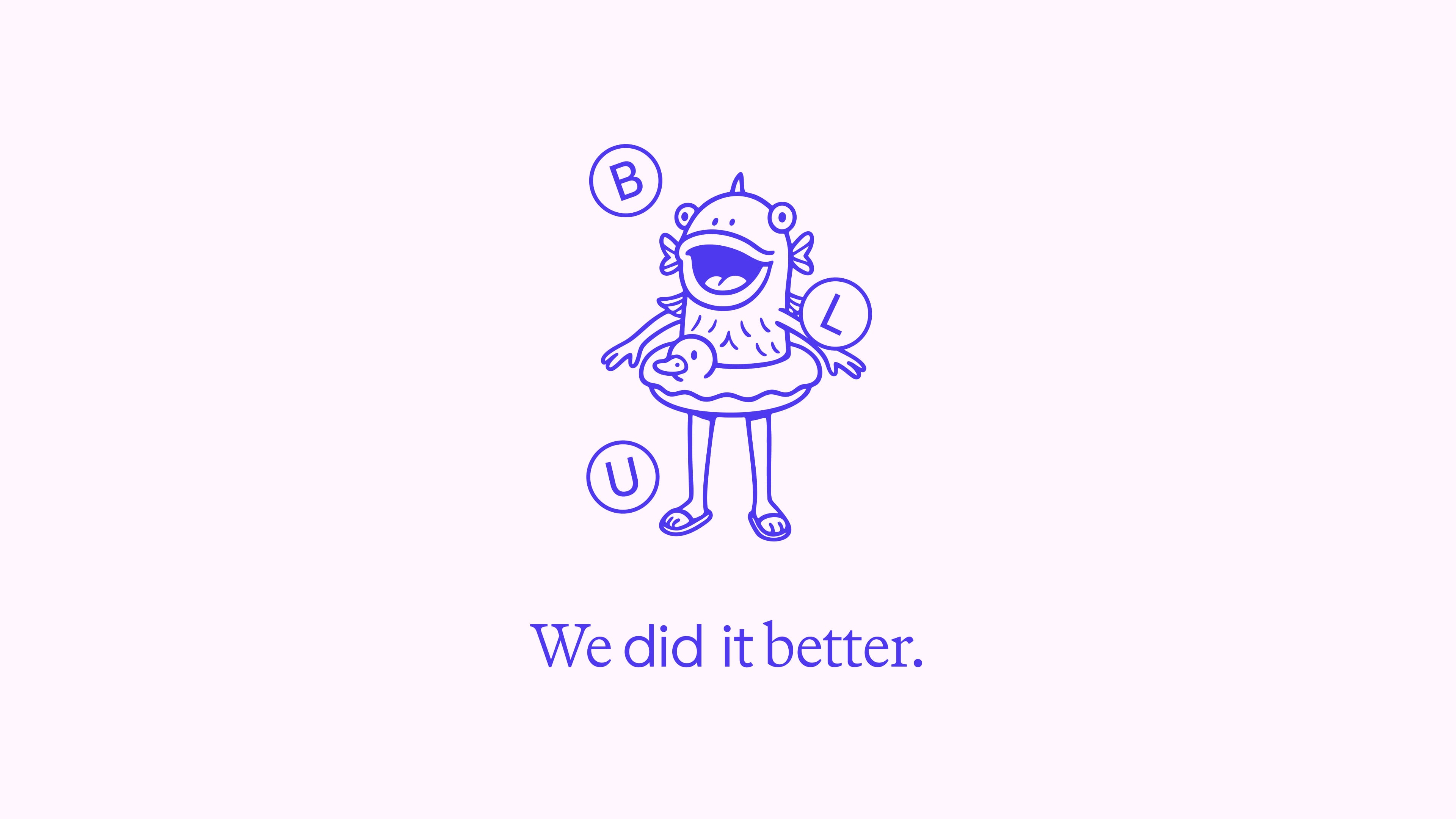
A brand with as much character as the work
BluBlu is an international creative house crafting bold, emotionally driven animation for brands that dare to be different. Their work has always been playful, experimental and ambitious, but the brand itself wasn't communicating that same energy. We created a new identity and digital experience that positions BluBlu as a creative partner for ambitious brands, while keeping the curiosity, humour and love of movement that make them who they are.
We started with an existing logo, refining its details and bringing several logo variations into one coherent system. The name BluBlu became a key creative cue. Its rhythm and sound inspired a visual language built around bubbles, movement and playful compositions.
The challenge was to make the identity feel more ambitious and sophisticated without losing its playful side. We also recommended turning a frog from one of BluBlu's previous publications into the brand hero.
From identity to Webflow
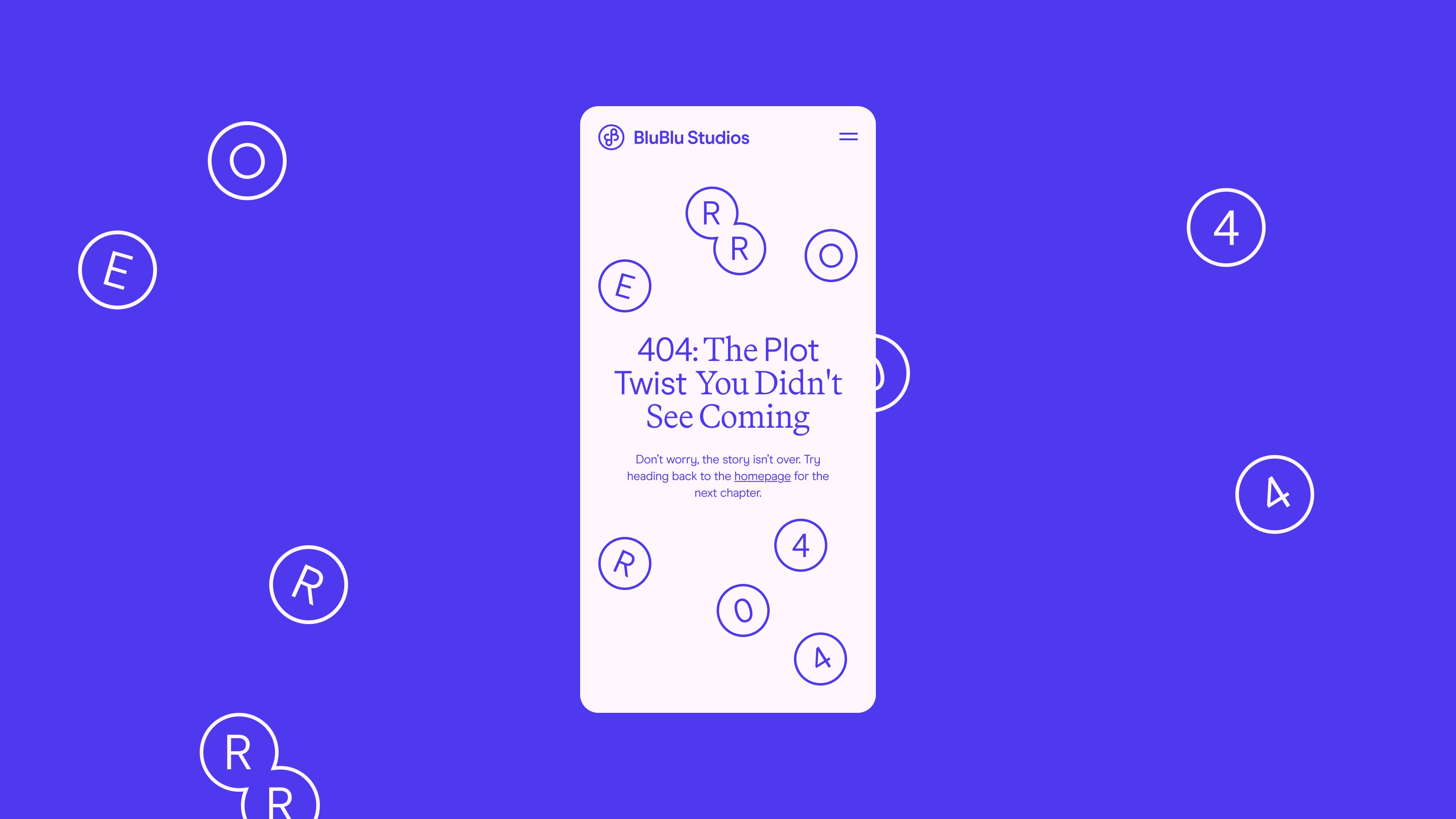
We translated the new visual language into a digital experience where movement is part of the brand. Dynamic layouts, component variations and microinteractions create a sense of rhythm, while playful details—like bubbles following the cursor on the homepage—bring the identity to life. Each page follows its own visual scheme, while a dedicated LOVE subpage—a living diary connecting selected projects with social updates—introduces a more personal and loose vibe.
A language for movement
Motion is already at the heart of BluBlu's work. Our task was to bring that quality into the brand itself—defining principles for how its visual language can move across digital touchpoints.
The guidelines turn bubbles, rhythm and transformation into a flexible interaction system. The result is a brand that feels playful and expressive without becoming childish or chaotic.
Taking the identity off the screen
We extended the identity into physical touchpoints, translating its visual language onto T-shirts and business cards. For the latter, the bubble motif became tactile through a combination of print and embossing.
The result is a system whose movement doesn't stop at the screen—it can be seen, touched and experienced in the physical world.